
Staying Ahead with Ideas
By feeding creativity and pushing boundaries, Jord has expanded its technology offering over the past 50 years. Its current primary focus is to pioneer minerals beneficiation techniques that enhance recoveries whilst minimising energy and water consumption.
John Warner, Managing Director of JordProxa and Former Head of Technology at Jord, describes Jord’s approach as technically adventurous and financially conservative. “Jord maintains cash reserves and doesn’t have debt, which allows us to explore new ideas and take risks with a strong financial anchor,” said John.
“It’s important to recognise that technology is changing at a more rapid pace today than it ever has before. What that means is that knowledge is changing and, as a business, we need to manage the change of knowledge. It’s important to have people who are powerful thinkers,” said John. “Jord thrives because it has a deliberate combination of thinkers, fast movers and enablers, and strategic and disciplined people.”
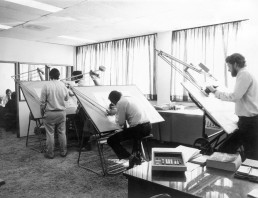
Pictured: Staff drawing in the Sydney office during the early Jord days.
When John joined the firm in the mid-1990s, Jord was focused on heat exchangers, furnaces and solid-liquid separation. John was instrumental in moving beyond supplying individual pieces of process plant to developing in-house capabilities to deliver more complex turnkey systems
“At Jord, we’re good at bringing the next generation of knowledge into the company and embracing new ways of working,” said John. “In many companies, the older generation are possessive of their technical expertise, whereas Jord’s culture encourages experienced staff to set the direction and share their knowledge, leaving space for others to grow and enable change.”
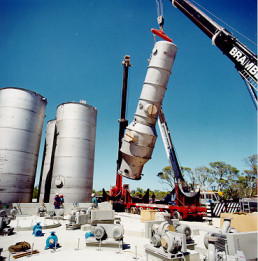
Pictured: Jord lifts evaporation/crystallisation modules in the late 1990s.
A downturn in the mining industry during the late 1990s prompted Jord to move into modular plant deliveries. The aim was to limit the risks inherent when constructing large plants on site. It was a strategic decision that continues to guide its plant designs today. “We learned how to do modules through experience,” said John. “When you lift modules from horizontal to a vertical position, for example, the loads move sideways, and all the pipes and details need to be designed for that.”
Jord continued to establish and grow new business divisions throughout the 2000s. It recognised significant potential in the clean air market and secured an exclusive agreement for equilibrium coefficients data to deliver world class vent gas scrubbers. It also established an engineering hub in India, directly employing highly qualified staff.
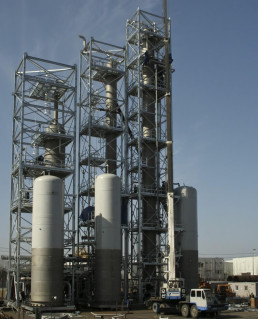
Pictured: Jord secured equilibrium coefficients data to deliver world class vent gas scrubbers in the 2000s.
John believes that developing a global network of technical experts has been the key to Jord’s evolution. “We were pioneers of remote working because we knew the right people in like-minded small companies around the world who we needed to engage,” he said. “So, we had the idea of linking people across the world, but the hardware didn’t exist. The introduction of global data connectivity was a significant milestone. We built our own project execution software and have stayed at the forefront by allowing our globally spread people to work efficiently and effectively together.”
Jord Director of Sales Dean Reeves says many people are familiar with Jord’s longstanding expertise in dry cooling systems, but the team is always hungry for new challenges. “Joint ventures are one of the ways we’ve extended our expertise and entered emerging markets,” said Dean.
“For example, we’ve established a firm position in the market producing process modules for FPSO [Floating Production Storage Offloading] vessels, which we specifically target through our Netherlands-based joint venture group, called Jord Oil and Gas Systems B.V.,” said Dean.
“We have five decades of project references to leverage. I’m excited to see how we will continue to grow and diversify for years to come,” said Dean.
In 2022, Jord celebrates 50 years of service. Thank you to all our staff (past and present), customers, vendors and suppliers who have been part of our story.


Cleaning Up the Messy Part of Mining: Turning Waste Into Opportunity
As the world accelerates towards net zero, demand is increasing for low-emission technologies like electric vehicles, solar panels and rechargeable batteries. At the heart of these innovations are critical minerals – including lithium, nickel and copper – which are essential ingredients needed to manufacture the clean energy future.
However, extracting these minerals from ore comes with significant challenges. Maximising critical mineral recovery must be balanced with reducing water use and managing mine tailings, all while keeping costs down.
Jord International is developing a solution to these challenges.
Partnering with the University of Newcastle Chief Investigator, Dr Peter Robinson, and supported by Trailblazer for Recycling and Clean Energy (TRaCE), Jord International has signed a $1.4 million R&D project to tailor their already successful ‘VIPER Dewatering Technology’ specifically to critical mineral recovery and waste mitigation.
From proven performance to scalable solution
This new TRaCE project is advancing Jord International’s existing VIPER technology, a system that was designed in collaboration with the University of Newcastle’s Centre for Bulk Solids and Particulate Technologies. Led by Professor Craig Wheeler and Dr Peter Robinson, VIPER optimises the Horizontal Vacuum Belt Filter (HVBF) via the addition of vibration and compaction to the material. This system facilitates a cost-effective and scalable solution to dewatering fine and problematic mining materials. The VIPER system can be retrofitted or supplied new, offering a practical, low-cost pathway to cleaner, more efficient mineral processing.
With ‘VIPER 2.0 – Vibration Assisted Recovery of Critical Minerals’, Jord International will construct a bespoke pilot plant at the University of Newcastle’s Institute for Energy and Resources (NIER). Access to these facilities will enable the team to tailor the performance of their vibration and dewatering technology towards mineral recovery and optimise the technology across new applications for commercial deployment.
“This project aims to translate the significant benefits of the VIPER Dewatering Technology to the recovery of critical minerals and handling of mining waste products,” said Dr Peter Robinson. “Conventionally, mineral recovery utilises copious amounts of water. However, with the application of VIPER, we expect to see substantial savings in cost and water requirements.”
A core focus of the project will be to further develop the technology as a practical solution to the challenge of dewatering mining tailings. Traditionally, tailings (the residual waste left over after ore processing) are discarded in large storage dams which, if poorly managed, can pose a significant environmental and safety risk. By applying compression and vibration, the VIPER technology can be applied to the extraction of critical minerals from this waste while enhancing the dewatering process, yielding a drier waster material with the potential for dry disposal.
“The landscape of dewatering technologies has advanced significantly in recent years, driven in large part by Jord’s successful deployment of the VIPER technology,” said Sam Caldwell, VIPER Technology Manager.
“As a core element of our innovation strategy, we remain focused on the continued optimisation and enhancement of this platform to expand its applicability and amplify its operational impact. We are placing particular emphasis on addressing the evolving demands of the critical minerals industry, where efficient dewatering is essential to meeting production and sustainability goals.”
This technology has multiple benefits including:
- Supporting the reuse of water within the processing cycle.
- Reducing energy requirements and transport costs by producing a drier, safer material.
- Facilitating safer disposal methods of waste material in the form of dry stacking.
- Allowing for additional critical mineral recovery.
Ultimately, the VIPER 2.0 technology aims to increase critical mineral recovery by 5 per cent, reduce water usage by up to 10 per cent and lower the energy consumption of the entire process. This translates to gaining more value from existing resources and having less environmental impact, which is crucial for a circular economy.
Supporting a smarter minerals industry
As the demand for critical minerals grows, so too does the need for smarter ways to obtain them. With their VIPER technology, Jord International is forging ahead in developing innovative solutions to meet this demand responsibly. By improving the efficiency and sustainability of critical minerals recovery, this project offers a blueprint for a scalable solution to support global demand and reduce environmental impact.
“Our global mining clients increasingly seek innovative technologies that maximise value recovery across their operations, whether through the extraction of previously unrecovered materials, enhanced water reclamation or improved energy efficiency,” said Kevin Barber, Head of Resources Jord International. “At Jord, we remain committed to addressing these fundamental challenges by bridging academic best practices with practical, industrial solutions.”
“The end-users of our technology are the world’s leading mining operations, organisations at the forefront of the global energy transition. The adoption of advanced dewatering solutions plays a critical role in enabling sustainable mineral processing, ensuring the efficient use of water, energy, and resources necessary for a low-carbon future.”
TRaCE will support this project by providing essential funding and access to a network of industry experts and facilities. By leveraging TRaCE’s ecosystem, the project team will be able to optimise the VIPER technology across a broad range of applications. For more information on how you can get involved in the TRaCE program, visit www.trace.org.au or contact hello@trace.org.au

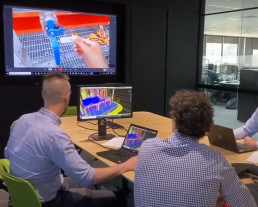
Video link remote inspections
When the COVID pandemic was declared, our JordProxa joint venture was building crystalliser modules in China and the project teams included personnel in South Africa, India and Australia. Remote inspections helped us to overcome the challenge of having geographically dispersed teams and international clients.
A key benefit we discovered was that remote inspections allow us to refer to all the available engineering information in the office – such as the 3D model and P&IDs – at the same time that we are inspecting the equipment, resulting in more thorough collaborative reviews in real time. The narrow view through the lens of a camera also forces all participants to focus on the same small details for attention and more efficient decision-making.
We undertake remote inspections by video link, which involves a local Quality Control inspector moving a camera very methodically around the modules in the fabrication workshop. Using P&IDs as a basis, we check all the details piece by piece.
Watch to learn more from our joint venture team delivering crystallisers and evaporators for battery metals producers

JordProxa delivers crystallisers for growing battery market
Australia based JordProxa Pty Ltd has recently delivered crystallisation plants for two major battery metal producers, solidifying its position in the growing new energy market.
JordProxa designed, fabricated and dispatched several large-scale orders to site, including an evaporator and two crystallisation plants to lithium producer Albemarle in Western Australia, and nickel sulphate, cobalt sulphate and ammonium sulphate crystallisation plants to Terrafame in Finland. The modular plants are now being installed in Western Australia and installation is underway on site in Finland with the last modules in transit.
JordProxa Managing Director John Warner says the rapid uptake of electric vehicles has led to a surge in demand for battery chemicals and associated technologies.
“Battery chemical producers need a technology provider that can meet and exceed the demands of product purity, with a focus on continued process improvement, to keep up with changing product specifications,” said Dr Warner.
“JordProxa understands the process fundamentals that influence product quality through evaporation and crystallisation. We combine the project delivery skills and global footprint of Jord and Proxa and are perfectly positioned to deliver state of the art plant solutions for ultra-pure battery chemicals at large tonnage scales.”
“We leverage an established network of fabrication alliances and modular design capabilities. This allows us to deliver key assemblies that are tested in the workshop before they are dispatched and installed on site. Our aim is to optimise project delivery time while minimising project risk.”
Jord International CEO Angus Holden says he is pleased the group is demonstrating its technical and operational expertise in the new energy market.
“Our track record over 50 years of business demonstrates that we can successfully design and build reliable plants with tangible process benefits.”
“In 2019, we delivered a nickel sulfate crystallisation plant to BHP Nickel West. This important crystalliser work from JordProxa delivers on our goal of supporting clean energy technologies and is generating a new long-term, sustainable revenue stream. It has helped our group achieve a record revenue for the 2020 financial year, aided by other new areas of business including enhanced minerals beneficiation and topside modules for offshore gas fields.”
For more information visit www.jordproxa.com.

FY2020 annual review: a record year
FY2020 was a record year for the Jord group. Pleasingly our growth came from new sources of revenue, such as:
- evaporation and crystallisation plants for the battery chemicals industry for electric vehicles and energy storage;
- enhanced minerals beneficiation for efficient concentrate and tailings de-watering; and
- Topside Modules for a host of new customers developing offshore floating production facilities.
Watch to learn more from our CEO Angus Holden and Director of Sales Dean Reeves

Introducing Jord Malaysia
Over the last 50 years, we’ve installed thousands of bundles spanning six continents and more than 80 countries.
Key features include:
- Strict safety first policy.
- Proven quality and on-time delivery performance.
- Round the clock operating capability.
- Easy international shipping access.
- Expertise in a range of exotic metallurgy.
- ASME code stamp accredited.
- Certified to the latest ISO operating standards.
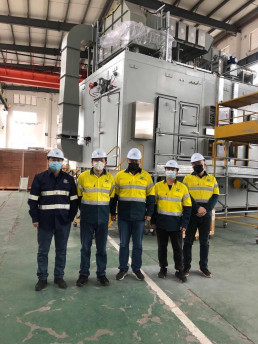
The fight back begins
Jord’s Hubei China based project team was well advanced in delivering a heavy workshop loading program as it closed down for the 2020 Chinese New Year festivities. Operations were scheduled to resume on 3rd February. Then came Covid-19 and with it, the Hubei provincial lock down. The workshop was barred shut and our staff were prohibited from returning to the workshop.
This inconvenience was first pushed through by working from home, negotiating with suppliers via phone and email. Brainstorming sessions came up with new ideas to tackle the situation and combat the mammoth workload.
After a 50-day lock down, restrictions were finally lifted. Focus turned to getting its backlog of gas turbine accessory modules out the door. Our principal customer GE and our workshop partner YMD showed good understanding throughout. Miraculously, all deliveries were recovered without impact to overall project delivery schedules.
Congratulations to the Jord Energy team for demonstrating a Can Do attitude in overcoming what at the time appeared insurmountable odds.

Roadtripping 7,700km
This sure would be one great hitch hike. While most of us were bunkered down at home under remote work lockdown, 40 intrepid truck drivers were transporting 120 x Jord ACC tube bundles from the east coast of China 7,700 km across some of the most remote forests, deserts and steppes on earth.
Their destination was the northern coast of the Caspian Sea, where Kazakhstan Petrochemical Industries (KPI) is developing a propane dehydrogenation (PDH) and polypropylene (PP) plant. The map on the right sets out the route taken. A large section of the journey followed the fabled silk road of ancient times.
The ACCs steel structures were delivered by ship from Dubai and mechanical components were trucked from Germany through Russia. You can imagine the paperwork involved with this.
Our two ACCs on this order condense exhaust steam from steam turbine driven compressors. The biggest operating challenge is maintaining performance across extreme weather conditions. The minimum winter air ambient temperature is -38 deg C whereas the maximum summer ambient is 50 deg C.
Omani CCPP commences commissioning
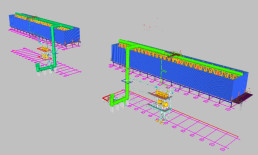
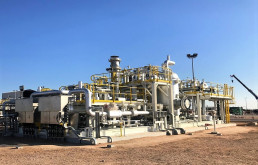
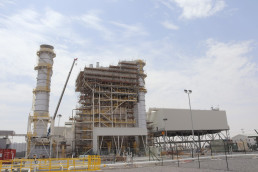
Despite the Covid-19 global pandemic, efforts are underway to commission the 90MW Lekhwair combined cycle power plant (CCPP) for PDO Oman. Jord’s scope comprises an Air-Cooled Condenser and an 11-module fuel gas treatment and delivery plant. It has been a technical triumph. This was not your average power plant. There were literally thousands of pages of specifications, Shell DEP amongst them, all tailored to oil & gas service rather than power service. and all interpreted differently, by owner consultants and other interested parties.
Aero-Jord
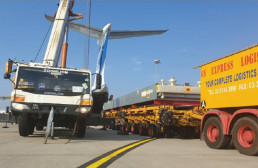
It was urgent. Really urgent. Replacement propane condenser bundles were required for a LNG plant. Our customers systems and approval procedures could not allow them to procure quickly enough. As a gesture of goodwill to this long-standing customer, Jord made an Executive decision to overrule our own ISO procedures, procuring the required materials on the strength of a handshake. Just like in the old days.
Component deliveries were closely expedited and airfreighted to Jord’s air cooler fabrication centre in Malaysia. The urgency of the assignment was explained to our work crew, who immediately agreed to work 20 hour days, 7 days week, to meet an air freight window.
The accompanying image shows one of the bundles being rear-loaded into the aircraft. It was a tight fit, with precious little room either side for these 15.5m (L) x 3.2m (W) bundles. Here’s a huge thanks to the project team, spanning Australia, Malaysia and India, who delivered to our customers expectations on this fast track delivery.